Health Optimization
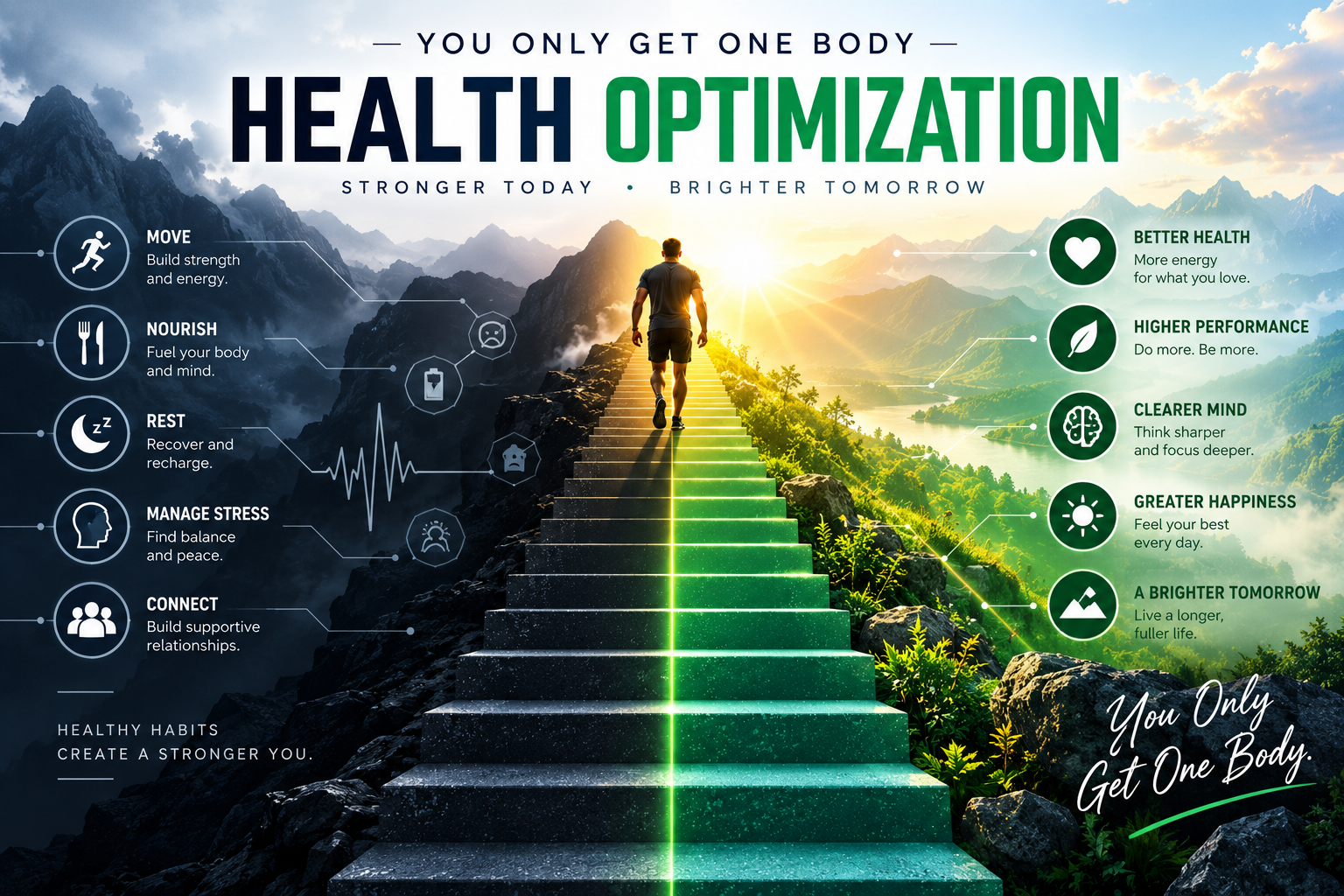
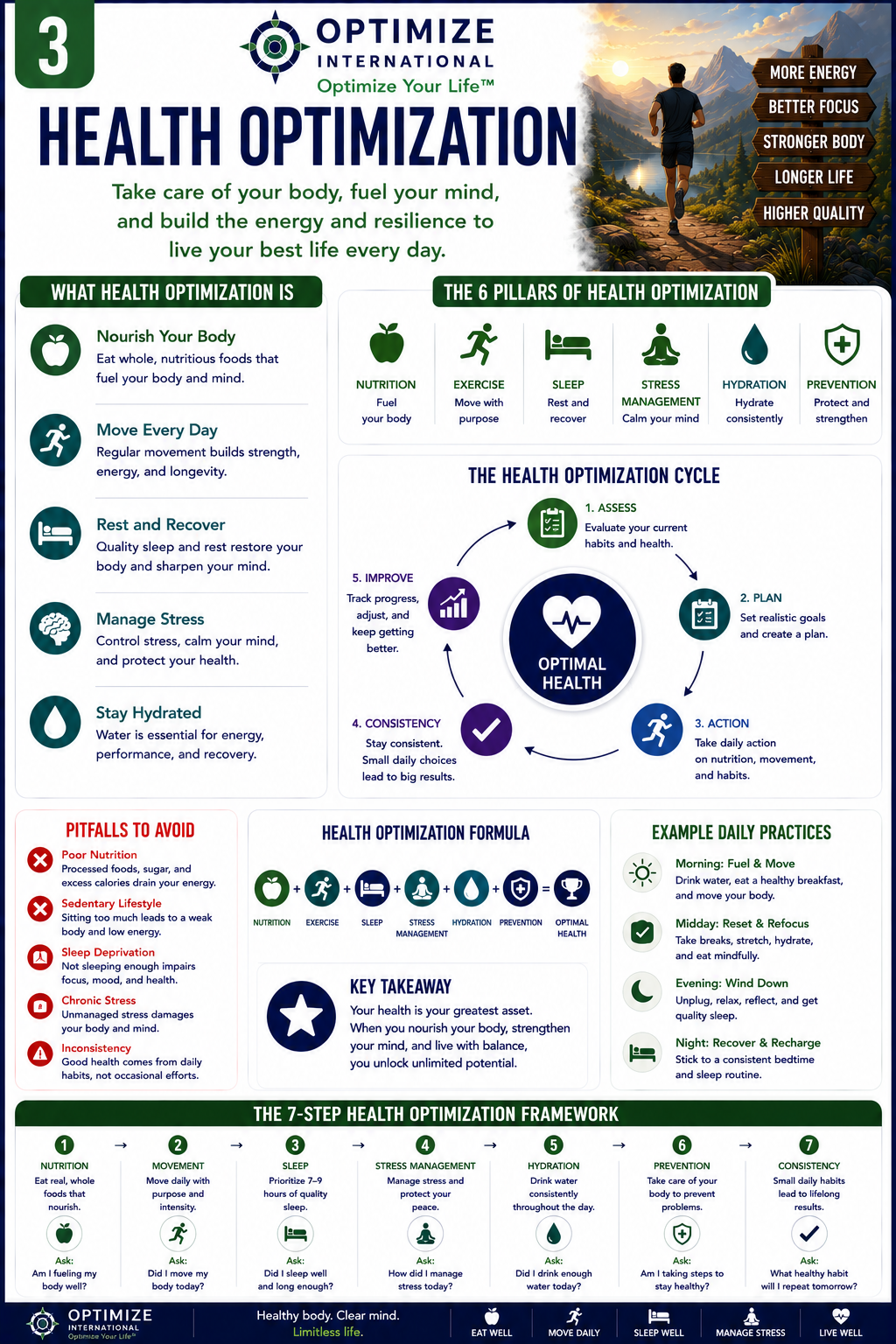
Your health influences nearly every dimension of your life—your energy, relationships, performance, enjoyment, independence, opportunities, and ability to pursue your dreams. While many aspects of health are outside our control, there are also important choices and habits that can influence our overall well-being.
The Health Optimization Certification Course helps participants assess their Current Health State, define their Desired Health State, identify opportunities for improvement, and develop practical actions for strengthening physical and mental well-being in collaboration with qualified healthcare professionals when appropriate.
The objective is not perfection or comparison with others. It is to make informed choices and continually improve the health factors you can influence.
Assess → Understand → Prioritize → Act → Measure → Adjust → Optimize
Key Areas of Health Optimization
Participants explore how to:
Assess Your Current Health State — Develop a realistic understanding of your physical health, mental well-being, lifestyle, habits, energy, and overall quality of life.
Define Your Desired Health State — Establish meaningful personal health and wellness goals that support your Desired You.
Understand Important Health Indicators — Become more aware of appropriate measures such as weight and body composition, blood pressure, cholesterol, blood glucose, resting heart rate, activity, sleep, strength, mobility, and recommended health screenings.
Improve Nutrition — Examine eating habits, food choices, portion awareness, hydration, and approaches to nutrition that support personal health goals.
Increase Physical Activity and Fitness — Develop sustainable approaches to movement, cardiovascular fitness, strength, flexibility, mobility, and overall physical capability.
Support Mental and Emotional Well-Being — Recognize the importance of stress management, emotional health, relationships, recreation, resilience, and seeking professional support when needed.
Improve Sleep and Recovery — Understand the role of sleep, rest, recovery, and healthy routines in supporting physical and mental performance.
Focus on Prevention — Take an active role in appropriate medical care, preventive screenings, vaccinations, dental and vision care, and discussions with qualified healthcare professionals.
Use Technology and AI Responsibly — Apply wearables, health apps, tracking tools, and AI to organize information, monitor trends, prepare questions, and support healthy behaviors without replacing qualified medical advice, diagnosis, or treatment.